

Learn How to Choose Your First 3×3
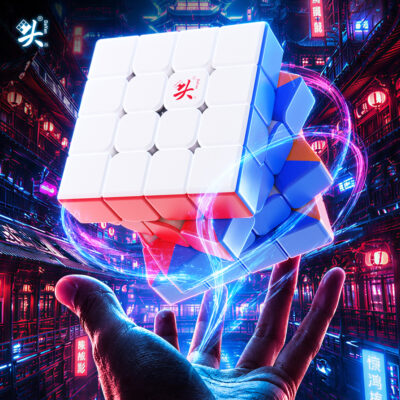
If you’re buying your first speed cube, you don’t need the most expensive 3×3 on the market. You need a cube that is easy to control, forgiving while you’re learning, comfortable to turn, and good enough to grow with you. For most beginners in 2026, that means starting with a magnetic 3×3 rather than a basic non-magnetic cube or an expensive flagship designed around competitive preferences.
But magnets aren’t the only thing that matters. A 5$ cube can sometimes be a better first choice than a much more expensive model. The right cube depends on your current solving level, budget, preferred turning feel, and how much adjustment you actually want. This guide explains what matters — and what doesn’t — so you can choose your first 3×3 without getting lost in terms like MagLev, core magnets, compression settings, and UV coating.
Quick Answer: What Speed Cube Should a Beginner Buy?
If you want the shortest possible answer: Choose a magnetic 3×3 from a reliable speed cube manufacturer within your budget. You don’t need flagship technology to learn speedcubing.
For most new cubers, prioritize:
- Magnetic positioning
- Stable and controllable turning
- Good corner cutting
- Comfortable size and weight
- Easy adjustment
- Replacement parts and accessories being reasonably accessible
- Good value rather than maximum technology
Your first speed cube should make solving easier and more enjoyable. It doesn’t need to be the fastest cube available.
Find Your Level in 30 Seconds
Never solved a 3×3 before
Your priority is control, stability, and value. Don’t spend heavily on advanced adjustment systems you may not use yet. A dependable magnetic cube gives you plenty of room to learn.
Look for: entry-level magnetic 3×3.
Learning the beginner method
If you can solve — or are currently learning — but aren’t focused on speed yet, choose something smooth and predictable. Magnets help pieces settle into position and can make turning feel more controlled.
Look for: affordable magnetic 3×3 with simple adjustment.
Solving around 1 minute
Now hardware characteristics become easier to notice. You may start to appreciate better corner cutting, different magnet strengths, and more refined tension/compression systems.
Look for: value-focused magnetic cube with useful adjustment options.
Sub-30 seconds
At this level, your turning style matters more. You may prefer a fast cube with lighter turning, a highly stable cube for aggressive turning, or something in between.
Look for: adjustable magnetic or core-magnetic models.
Starting competitions
You still don’t automatically need the most expensive flagship. Choose hardware you can solve consistently under pressure.
Look for: a reliable main cube plus a backup you already know how to use.
Before Buying a Speed Cube, Answer These 3 Questions
1. What’s your budget?
There are excellent beginner cubes at relatively low prices, and modern budget cubes can offer features that were previously found mainly in expensive models. A useful way to think about the market is:
Entry budget: Your first proper speed cube.
Best value: Better performance and adjustment without flagship pricing.
Enthusiast: More advanced magnetic and adjustment systems.
Premium: Flagship hardware for cubers who know what characteristics they want.
Spending more can give you additional technology and refinement. It does not automatically make you faster.
2. What turning feel do you want?
If this is your first cube, you may not know yet — that’s completely normal. Three useful starting descriptions are:
Controlled
A controlled cube feels predictable and doesn’t seem eager to overshoot every turn This is often a good starting point for beginners.
Smooth
You want turning to feel fluid and comfortable rather than harsh or extremely aggressive.
Fast
A fast cube requires less effort to turn but may demand better turning accuracy. New cubers sometimes assume the fastest cube must be the best cube; it isn’t. A slightly more controllable cube may actually produce better solves if you’re making fewer turning mistakes.
3. How much adjustability do you want?
Some cubes are intentionally simple. Others allow you to change tension, compression, magnet strength or other characteristics. More settings are useful when you understand what you want to change. For a first cube, easy adjustment is often more valuable than maximum adjustment.
Magnetic vs Non-Magnetic Speed Cubes
This is one of the most common questions from new cubers.
What does a magnetic cube do?
Small magnets inside the cube help pieces align as you complete turns. They don’t solve the cube for you. Think of the magnets as providing a subtle positioning force as a layer approaches alignment.
That can make the cube feel more stable and predictable.
Should beginners buy a magnetic cube?
For most people buying a new speed cube today, yes. Affordable magnetic 3×3s are widely available, so you generally don’t need to choose between beginner pricing and magnetic positioning.
Is a non-magnetic cube bad?
No. You can learn and become fast on one. But if similarly priced magnetic and non-magnetic models are available, we’d usually choose the magnetic option for a beginner.
Spring vs MagLev: What Does It Actually Mean?
Here’s where cube terminology starts sounding more complicated than it needs to. Traditional speed cubes commonly use springs as part of their centre mechanism. Some modern cubes use MagLev, replacing the traditional spring interaction with repelling magnets.
Does MagLev automatically make a cube better?
No. MagLev can change the turning characteristics and eliminate traditional spring noise, but the overall performance of a cube depends on much more than one mechanism. A good spring-based cube can be an excellent choice. A MagLev cube can also be excellent.
Don’t choose your first cube simply because the box says MagLev.
Choose the better overall cube for your needs and budget.
Piece Magnets vs Core Magnets
Standard magnetic cubes typically use magnets between moving pieces to assist alignment. More advanced cubes can also use magnetic systems involving the core and pieces. Core-magnetic designs can change how the cube stabilizes and returns toward alignment throughout a turn. They can feel excellent. But there’s an important point for beginners:
You don’t need core magnets to start speedcubing.
If your budget allows it and you prefer that model, great. Otherwise, a well-designed standard magnetic cube can take you a very long way.
What Is UV Coating?
UV coating refers to a glossy surface treatment found on many modern cubes. It can affect grip, appearance and how the exterior feels. It may also make the cube look more premium. But UV coating doesn’t make someone faster by itself. For a beginner, treat coating as a preference, not a requirement. If the standard version gives you everything you need at a lower price, don’t feel pressured to upgrade purely for the coating.
What Are Tension and Compression Settings?
The centre mechanism affects how tightly or loosely the cube is configured. Different manufacturers implement adjustment differently, but the practical goal is similar: changing aspects of how the cube turns and behaves. A looser setup can feel faster and more flexible but may become less stable. A tighter setup can feel more controlled but can become restrictive if taken too far. Beginners should avoid changing every setting immediately.
Use the cube first.
Get familiar with its factory configuration, then make small changes one at a time. Otherwise, you won’t know which adjustment improved — or worsened — the cube.
Corner Cutting: Important, but Often Misunderstood
Corner cutting is the cube’s ability to complete a turn when another layer isn’t perfectly aligned. Good corner cutting makes imperfect turning more forgiving. That’s useful while you’re developing accuracy. But enormous corner cutting shouldn’t be your main buying criterion. A cube needs to balance:
corner cutting + stability + control + speed.
Excellent hardware helps compensate for small inaccuracies. It shouldn’t replace learning accurate turning.
Best Beginner Speed Cubes by Budget
Rather than recommending ten cubes and calling all of them “best,” MCUBES divides recommendations by the buyer they’re actually suitable for. Prices and availability can change, so check the current product page before purchasing.
Best Entry-Level 3×3
mcubes recommendation: Mcubes YJ YuLong v3 magnetic 3×3 cube
Current price: 5.95 USD
Choose this if you’re learning your first solve or moving from a basic puzzle to your first speed cube. Why we recommend it:
Best for: First-time cubers
Magnetic: Yes
Size: 55 mm
Weight:79g
Adjustment: Standard
MCUBES Beginner Score: [9/10]
Best Budget Magnetic UV
mcubes recommendation: QiYi Warrior UV 3×3
Current price: 7.95 USD
This is our choice for someone who wants magnetic with uv coated performance while keeping the purchase affordable. Why we recommend it:
Best for: Beginners wanting maximum value
Magnetic system: YES
Size: 5 mm
Weight: 56 g
Adjustment: Standard
MCUBES Beginner Score: 9.5/10
Best Value 3×3
mcubes recommendation: MoYu Weilong WRM V11 magnetic standard
Current price:
This category is for buyers willing to spend slightly more for hardware they can continue using as they become faster. Why we recommend it:
Best for: Beginner → intermediate progression
Magnetic system: YES
Size: 55.5 mm
Weight: 64g
Adjustment: Intermediate
MCUBES Beginner Score: 10/10
Best Upgrade-Friendly 3×3
mcubes recommendation: MoYuweilong wrm v10/v11 20 magnetic ball-core
Current price: 32.95 – 39.95 USD
Choose this if you want your first serious cube to offer enough adjustment and performance headroom that you won’t immediately want another cube as your times improve.
Best Premium First Cube
mcubes recommendation: Gan 15 Maglev, Gan 16 Maglev Max
Current price: 61.95-84.95 USD
You don’t need a premium cube as a beginner. But if budget isn’t the main consideration and you want premium hardware from the beginning, this is the model we’d choose from our current inventory.
How mcubes Tests Beginner Speed Cubes
Specifications don’t tell the whole story. A cube can look impressive on paper and still be a poor recommendation for a new cuber. That’s why our beginner recommendations consider six areas.
mcubes Beginner Score
Every tested cube receives scores for:
Control — How easy is it to turn accurately?
Stability — Does the cube remain predictable during faster sequences?
Corner Cutting — How forgiving is it when layers aren’t perfectly aligned?
Adjustment Difficulty — Can a beginner understand and configure the cube without unnecessary complexity?
Value — Does the performance justify the current price?
Upgrade Headroom — Can you continue using it as your solving improves?
The objective isn’t to find the technically most advanced cube.
It’s to find the cube that makes the most sense for the person buying it.
Best Speed Cube Under 10 USD
If your budget is below 10 USD, prioritize the fundamentals.
You want the best combination of:
- Reliable mechanism
- Comfortable turning
- Stability
- Magnetic positioning where available
- Good value
Don’t sacrifice the fundamentals just to get a feature with an impressive name.
Current mcubes pick under 10 USD: QiYi warrior uv magnetic, YJ YuLong v3 magnetic, MoYu meilong v2 magnetic
Should Your First Speed Cube Be Expensive?
Usually, no.
Your biggest improvements at the beginning will come from learning and practice.
After learning a reliable solving method, you can work on:
- Turning accuracy
- Finger tricks
- Lookahead
- Efficient algorithms
- Cross planning
- F2L
- OLL
- PLL
- Consistency
Hardware matters. But a flagship cube cannot replace technique. A beginner cube gives you a platform on which to build that technique.
When Should You Upgrade Your Speed Cube?
Don’t upgrade simply because a new model launched. Consider upgrading when you can identify something your current cube is limiting.
For example:
“My cube is difficult to control during faster algorithms.”
That’s useful information.
“I want stronger/weaker magnetic feedback.”
Also useful.
“I want more adjustment because I now understand the setup I prefer.”
Good reason.
But:
“A faster cuber uses this expensive cube.”
That’s not enough by itself.
The best cube for another solver isn’t automatically the best cube for you.
Already Own a 3×3? Test Yourself Before Upgrading
Before buying another cube, find out where you currently stand. Use mcubes Timer to record your solves and calculate an Ao5 (Average of 5) and Ao12 (Average of 12). Don’t judge yourself from one lucky solve.
Your average tells you much more about your current level Then ask: Are your solves inconsistent because of the cube? Or because you’re still developing your technique? If your hardware works reliably, your next improvement may come from practice rather than another purchase.
Start a 3×3 session on mcubes Timer
And when you’re ready to test your skills against other cubers, continue into mcubes Arena.
Practice → measure → improve → compete.
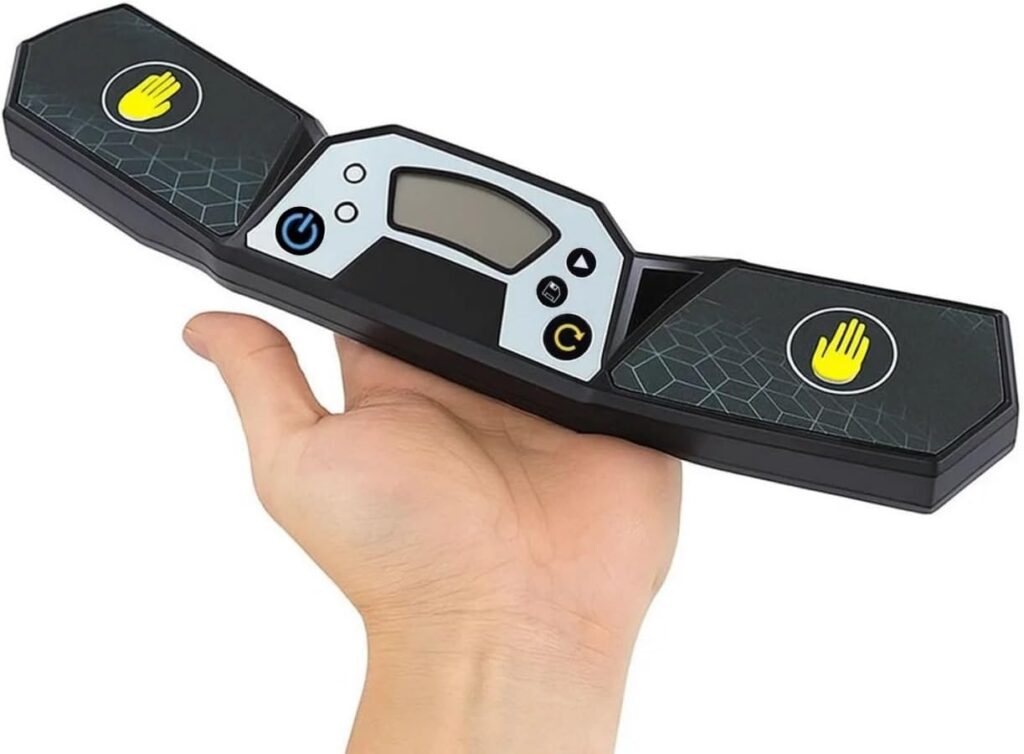
Do You Need a Speedcubing Timer?
You don’t need a physical timer to start learning. A digital timer is enough for tracking early progress. As you get more serious about speedcubing, you may want a physical competition-style timer for a different practice experience. For now, start timing solves consistently and track averages rather than obsessing over individual personal bests.